
Obama to address doubts over economy, Romney predicts "cheap words" - Reuters
WASHINGTON |
WASHINGTON (Reuters) - President Barack Obama, seeking to counter deep doubts about his economic leadership, will ask voters on Thursday for more time to boost growth while arguing that his Republican rival Mitt Romney would resurrect policies that plunged the United States into crisis.
Obama will use a campaign speech in the battleground state of Ohio to try to bounce back from a series of recent setbacks.
These include an anemic jobs report and a misstep in which he seemed to play down the economy's woes by saying the private sector was "doing fine." He later told reporters he did not think the overall economy was fine.
The Democratic president, who risks losing the November 6 election if he cannot convince voters that his economic remedies are working, will take aim at Romney and congressional Republicans, who have rejected his ideas for spurring job growth.
"Governor Romney and his allies in Congress believe that if you simply take away regulations and cut taxes by trillions of dollars, the market will solve all our problems on its own," an Obama campaign official said.
"The president believes the economy grows not from the top down, but from the middle class up, and he has an economic plan to do that."
Obama's approval ratings have slipped to their lowest level since January - from 50 percent a month ago to 47 percent - because of deep economic worries, wiping out most of his lead in the White House race, a Reuters/Ipsos poll showed on Tuesday.
The campaign aide said Obama's remarks for Thursday had been in the works for weeks, with the president trying to reset the election-year narrative as he kicks off an intensive schedule of summer campaigning.
"The more time he spends talking about his vision for how we get out of this morass long term, the better off he is," said Neera Tanden, president of the Center for American Progress and a former policy adviser to Obama and President Bill Clinton.
Romney and his fellow Republicans seized on Obama's comments about the private sector last week to portray him as lacking understanding of Americans' economic troubles and accuse him of putting government spending at the center of his efforts to lift the economy.
On Wednesday, Romney predicted Obama's speech in Cleveland would have soaring rhetoric but little else. "My own view is that he will speak eloquently but that words are cheap," he said, accusing Obama of lacking the ideas and business know-how to make a difference in growth and hiring.
"He is not responsible for whatever improvement we might be seeing," Romney said. "Instead he's responsible for the fact that it has taken so long to see this recovery, and the recovery is so tepid."
LACK OF VISION?
In his appearance at Cuyahoga Community College, Obama will argue that Romney is the one lacking ideas.
The White House has frequently said the former Massachusetts governor would revive the policies of Republican President George W. Bush, including lax financial regulation and budget-busting tax cuts that set the stage for economic crisis.
Obama rolled out a series of growth-boosting proposals in a speech to Congress last September and in his State of the Union address in January, including more spending on roads and bridges as well as aid to states to help them hire teachers and police officers.
But congressional Republicans have balked at most of those ideas, saying they would only add to the budget deficit without helping the economy regain momentum.
"The president has already laid out his vision in terms of what steps he thinks this Congress needs to take. Mitt Romney has not," said Jen Psaki, a former White House aide. "It's not a lack of plans or lack of vision. It's a lack of action by Congress."
After the Cleveland speech, Obama will travel to New York to visit the One World Trade Center site and then attend an exclusive fundraiser at the home of actors Sarah Jessica Parker and Matthew Broderick, co-hosted by Vogue editor Anna Wintour.
Parker, star of the television series "Sex and the City," could help the president reach out to women voters and young people, but the event also risked undercutting his efforts to connect with middle-class voters. Parker's glamorous image may be difficult to square with Obama's economic message.
Republicans have drawn attention to Obama's fundraisers with celebrities, including one last month with actor George Clooney, saying his preoccupation with hobnobbing with the elite had made him out of touch with the plight of Americans struggling with job losses and financial hardship.
(Editing by Bill Trott and Christopher Wilson)
Italy V Croatia : UEFA Euro 2012 Match Preview - Football
Published: 14 Jun 2012 - 12:16:36
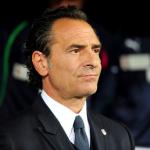
Prandelli mulling over Di Natale-Balotelli switch
Italy coach Cesare Prandelli has admitted he is considering dropping errant forward Mario Balotelli in favour of Antonio Di Natale for Thursday's Group C clash with Croatia in Poznan.
Italy need a victory to ensure they tackle Ireland in their final group game with their destiny in their own hands.
They began with a positive 1-1 draw against world champions Spain but Croatia then beat the Irish 3-1 to move top of the group.
Failure to beat Croatia would mean Italy needing to beat Ireland in their final game in Poznan and hoping the result between Spain and Croatia does not cost them.
"What counts in the choices is the nervous and physical sate of the players," he said.
"The next training sessions will be real ones and those will show me (who's in form), as will scientific data.
"This will be the decisive match of the group. The idea is not to change too much so that we have consistency.
"It won't be easy, it will be decided by details."
In the opening game, he opted for a back three with wing-backs Christian Maggio and Emanuele Giaccherini working tirelessly on the flanks.
But he also admitted he hadn't decided who would start up front.
"I don't know yet, we will try to understand who used the most energy," he said.
"We have to exploit those who are in good form.
"We will play against a very different team (Ireland), they will put us in difficulty and it's perhaps even harder because they are unpredictable.
"They can change their system from one half to another so we need to prepare with a lot of attention."
"We have no fear" - Bilic
Prandelli sung the praises of Di Natale, the goalscorer against Spain, while speaking of Balotelli's need to think more about helping the tam rather than trying to win games on his own.
It suggested a change up front is afoot, but Prandelli did offer some encouragement to the 21-year-old Manchester City forward.
"When a player knows he's messed up he needs to know that he has another opportunity that next time he can do the right thing," said Prandelli.
Prandelli also crticised Balotelli for not getting behind the Spain defence while praising Di Natale for doing exactly that, not only with the goal he scored but wth another chance as well.
The pressure is on Italy as they play opponents with two more points than them.
And Croatia coach Slaven Bilic says his side only need one more win to reach the quarter-finals.
"We have three points, and we're top of the group," said Bilic.
"One win would be enough to go to the quarter-finals. We cannot fly in the championship, but let's go step by step.
"We respect all of our opponents. We have no fear against anyone. Spain and Italy are favourites in our group, but I still think we are able to beat one of them."
Should they do that, they will be in the last eight while Italy would need to beat Ireland in their final game and hope Spain slip up somewhere as well.
Italy V Croatia - view commentary, squad, and statictics of the game live.

Related Italy News



Westlife singer Shane Filan is declared bankrupt - BBC News
Westlife singer Shane Filan has been declared bankrupt in the UK.
The Irish band have sold millions of records but Mr Filan suffered enormous losses in his country's property crash.
In a statement, the 32-year-old said he had "worked long and hard" to tackle his debts and was devastated that his problems have come to this conclusion.
The pop star filed for bankruptcy in the UK which has a less onerous bankruptcy regime than the Republic of Ireland.
In the UK the period of bankruptcy typically lasts for a year but in the Republic of Ireland it is at least three years and more commonly 12 years.
Mr Filan owns a property company, Shafin Developments Limited, with his brother Finbarr.
It was established in 2004 and had been involved in developments in Counties Leitrim and Sligo in the west of Ireland.
Last month, the company was placed in receivership.
EscapeEarlier this week, the singer was declared bankrupt at Kingston-upon-Thames County Court and his name has been placed on the UK insolvency register.
The father-of-three is the latest in a steady stream of highly indebted Irish property developers who have filed for bankruptcy in the UK.
Ireland has agreed to liberalise its bankruptcy regime as one of the conditions of its EU/ IMF bailout.
However the country's banks are concerned that the reforms could lead to a flood of mortgage defaults as ordinary homeowners use bankruptcy to escape from negative equity.
Westlife is one of the most successful boy bands of the last decade, selling more than 44m records.
Last October, they announced they were splitting up.
The band is currently in the middle of a farewell tour and continues to fill major concert venues.
Thousands in need of food, shelter after Myanmar clashes - Reuters UK
SITTWE |
SITTWE (Reuters) - Thousands of displaced Muslim Rohingyas and ethnic Rakhine Buddhists were in need of food, water and shelter in northwestern Myanmar on Thursday after fleeing the country's worst sectarian clashes in years.
Houses were burnt down late on Wednesday in two villages near the Bangladesh border, but there were no reports of further deaths. Scores of people are feared to have been killed in the rioting that broke out in Rakhine state on June 8.
Places that were flashpoints earlier in the week, including the state capital Sittwe, were quiet as violence started to subside after days of arson attacks and killing that have presented reformist President Thein Sein with one of his biggest challenges since taking office last year.
"Tensions between the two groups have eased. There are around 20,000 refugees in Sittwe. Most of them are from the villages where people fled in fear of the violence," Aung Myat Kyaw, a senator for Rakhine state, told Reuters.
"They are in need of food and, because of the heavy rain, there are concerns about the refugees' health and whether they have enough shelter," he added.
The violence had killed 21 people as of Monday, state media said, but activists fear the death toll could be much higher. At least 1,600 houses have been burnt down.
The army has taken hundreds of Rohingyas to Muslim villages outside Sittwe to ensure their safety.
"They are worried for their lives. The army is there so their life is secure," said Shwe Maung, a Muslim member of parliament for the ruling Union Solidarity and Development Party. "There are still so many Rohingyas in downtown Sittwe and they are afraid of being attacked."
The United Nations and a medical aid group said this week they were pulling staff out of the area because of the violence. U.N. special envoy for Myanmar, Vijay Nambiar, travelled to the area on Wednesday.
DELICATE SITUATION
Speaking at an International Labour Organization conference in Geneva, the first stop on a five-nation European tour, Myanmar Nobel laureate and opposition leader Aung San Suu Kyi expressed concern about the unrest and said laws needed to be enforced to prevent such conflicts from taking place.
"Without the rule of law, such communal strife will only continue," she told a news conference.
"The present situation will have to be handled with delicacy and sensitivity and we need the cooperation of all people concerned to rebuild the peace that we want for our country."
Food shortages could last three to four days as poor roads and infrastructure delayed supplies from aid organisations, said Htun Myit Thein of the Wan Latt Foundation, which is managing three camps that together hold about 12,000 people in Sittwe.
"The camps aren't clean enough and some of the men are getting ill," he said. "So far there is no support from the government or international groups."
It is unclear what sparked the rioting. Relations between the two communities have been uneasy for generations and tension flared last month after the gang rape and murder of a Buddhist woman that was blamed on Muslims.
That led to the killing of 10 Muslims in reprisal on June 3, when a Buddhist mob stopped a bus they were travelling on. The passengers had no connection to the murdered woman. State media said three Muslims are on trial for the woman's death.
The violence follows a year of dramatic political change after nearly 50 years of repressive military rule, which includes the release of hundreds of political prisoners and truces with ethnic minority rebels.
The government has also allowed trade unions and promised to get rid of forced labour. Recognising this progress, the International Labour Organization lifted restrictions on Myanmar on Wednesday.
The communal violence in Rakhine state and the international reaction may prompt further change: the Rohingyas are not included among the officially recognised ethnic groups of Myanmar but Thein Sein may be forced to improve their plight.
Up to 800,000 Rohingyas live along Myanmar's border with Bangladesh in abject conditions. Neither country recognises them as citizens and the Bangladeshi authorities have turned away boats of Rohingyas fleeing the violence this week.
(Reporting by Reuters staff reporters; Writing by Alan Raybould; Editing by Martin Petty and Robert Birsel)
Syrian shrine damaged in suicide bombing that wounds 10 - CBC
A suicide bomber detonated his car packed with explosives in a Damascus suburb today, wounding 10 people and damaging one of Shia Islam's holiest shrines, Syria's state-run news agency and witnesses said.
The golden-domed Sayyida Zainab shrine attracts tens of thousands of Shia pilgrims from around the world every year who come to visit the tomb, which is believed to house the remains of the granddaughter of Islam's Prophet Muhammad.
The site is popular with Iranian and other pilgrims and tourists.
Witnesses on the scene said the bomber detonated his van in a parking lot about 50 metres from the shrine. Guards tried to stop him from getting into the area but he pushed through, they said, setting the explosives off inside the lot. The blast shattered the shrine's windows and knocked down chandeliers and electric ceiling fans and caused cracks in some of its mosaic walls.
'"I worked for 10 years before I was able to buy this car. I parked it here last night and now it's totally destroyed.'—Amin Daoud, Syrian labourer
Six tourist buses and more than 30 cars and a small police bus also were damaged.
It was not immediately clear whether the shrine was the intended target. The site of the blast is only 15 metres from a police station, which may have been the target. Several bombings in the past few months have targeted security buildings and police buses.
Civilians killed in Homs
Car bombs and suicide bombings have become common in Syria as the 15-month uprising against President Bashar al-Assad becomes increasingly militarized.
As the violence grows more chaotic, it is difficult to assign blame for much of the bloodshed. Western officials say there is little doubt that Islamist extremists, some associated with the al-Qaeda terror network, have made inroads in Syria as instability has spread.
"I worked for 10 years before I was able to buy this car," said Amin Daoud, a 35-year-old labourer at the scene of the explosion. "I parked it here last night and now it's totally destroyed."
On Thursday, rebels reportedly clashed with government forces in several parts of the country and troops continued to pound rebel-controlled areas in the central province of Homs.
The Britain-based Syrian Observatory for Human Rights said three civilians were killed overnight in clashes at the entrances of the Jouret el-Shayyah neighbourhood in Homs city. Another died in the rebel-held town of Rastan north of Homs, which has been under constant and intense fire from regime forces for days.
Syrian forces on Wednesday overran a mountain enclave near the Mediterranean coast, seizing the territory back from rebels after battles that raged for eight days.
State television said regime forces had "cleansed" Haffa of "armed terrorist groups."
On Thursday, witnesses said a team of UN observers has finally entered Haffa, in the coastal Latakia province, two days after an angry crowd hurled rocks and sticks at the UN mission's vehicles, forcing them to turn back, and stopped by the burned-out building of the ruling Baath party's local branch.
Sausan Ghosheh, a spokeswoman for the observers, said they had been trying to reach Haffa since June 7.
Syria denies it's in civil war
With the bloodshed ramping up, France on Wednesday joined the UN peacekeeping chief in declaring Syria was in a state of civil war."When many groups belonging to the same people tear each other apart and kill each other, if you can't call it a civil war, then there are no words to describe it," French Foreign Minister Laurent Fabius told a news conference in Paris.
Syria's Foreign Ministry expressed "astonishment" over the claims Wednesday.
"Syria is not witnessing a civil war but rather an armed conflict to uproot terrorism and confront killings, kidnappings, bombings ... and other brutal acts," the ministry said.
Syrian authorities characterize rebels as terrorists and armed gangsters, and the uprising as a foreign plot to destabilize the country.
Activists say some 14,000 people have been killed since the uprising began in March 2011.
Disarray in Sangh Parivar - Deccan Herald
Ex-RSS chief Sudarshan eulogises Jinnah commitment
The ideological disarray and divide appear to be evident not only in the BJP but also in the extended Sangh Parivar.
 While the political arm — the BJP — is already reeling under repeated mutinies, the mother organisation — the RSS — seems to be on the crossroads with former RSS chief S Sudarshan on Tuesday asserting that Pakistan founder Mohammad Ali Jinnah was committed to an undivided India. The shocker from Sudarshan, who paved the way for Mohan Bhagwat on March 21 this year, has raised eyebrows within the Nagpur outfit, let alone the BJP.
On being asked if he regarded Jinnah as secular, the former RSS head said in Nagpur: “Jinnah had many facets. He was once associated with Lokmanya Tilak and was totally committed to an undivided India.
“When Gandhiji started the Khilafat movement, Jinnah had opposed it, saying that if the Caliph i n Turkey had been dethroned, what had India got to do with that. At that time, nobody listened to him, which saddened him. So he quit the Congress and left for England. After returning in 1927, the Britons brainwashed him and prompted him to put forth the demand for a separate state of Pakistan for Muslims.”
Sudarshan said had Gandhiji been adamant, Partition would not have taken place. “But he was not for it because Nehru was his weakness.”
On whether the Sangh had taken a tough stand during his leadership when L K Advani made the “Jinnah is secular” comment, Sudarshan said he had given clarifications on the matter. Asked if he was satisfied with the clarification, he answered in the affirmative.
Misinterpretation
RSS leader Ram Madhav on Tuesday said the former RSS chief’s views were misinterpreted and what Sudarshan had meant was that at one point of time, Jinnah had supported an undivided India.
Madhav said Sudarshan had also spoken about how Jinnah had been one of the main causes of Partition.
Meanwhile, shaken by Shourie’s description of BJP president Rajnath Singh as “Alice in Blunderland” and the blistering public criticism of its “rudderless functioning”, the party on Tuesday asked Shourie to explain his conduct.
After contemplating an immediate suspension of Shourie, the party sought to revise its views and thought it fit to wait until Shourie submitted his written explanation.
Shourie on Tuesday night said he would give a clarification, and that his ties with the party had not snapped. “If there is any ambiguity and the party president and others have asked for clarification, I will clarify. There is no problem,” Shourie told reporters. The BJP Parliamentary Board is likely to meet this week to decide on Shourie’s fate, according to sources.
In a no-holds-barred attack on the party president and senior leader L K Advani, Shourie on Monday demanded the sacking of the entire top rung of the party. “They behave like Humpty-Dumpty. The BJP, under their charge, has become a ‘kati patang,’” he said and called for handing over the reins of the party to regional satraps.
RSS view
Meanwhile, Rajnath Singh on Tuesday met Bhagwat to discuss the issue. The Sangh has not completely rejected Shourie’s criticism and has in fact expressed its agreement with some of his bold propositions.
RSS national executive member Ram Madhav said it was for the BJP to take control of the situation. Asked about the RSS’s role in the BJP, he said “some of our friends are there” and that they would look after the best interest of the organisation.
U.S. doping officials start action against Armstrong - Reuters
WASHINGTON |
WASHINGTON (Reuters) - The U.S. Anti-Doping Agency (USADA) has notified seven times Tour de France winner Lance Armstrong that formal procedures against him had commenced over allegations he used performance-enhancing drugs during his record-breaking career.
Although Armstrong has not been charged with any offences and has repeatedly denied ever cheating, USADA told the American they had forwarded their allegations to the Anti-Doping Review Board, which would decide whether to proceed with the case.
"This formal notice letter is the first step in the multi-step legal process for alleged sport anti-doping rule violations," USADA said in a statement released on Tuesday.
"As in every USADA case, all named individuals are presumed innocent of the allegations unless and until proven otherwise through the established legal process.
"If a hearing is ultimately held then it is an independent panel of arbitrators, not USADA that determines whether or not these individuals have committed anti-doping rule violations as alleged."
Five of Armstrong's associates, three doctors and two team officials, were also told that procedures had begun against them in what could be one of the biggest doping cases in sports.
Armstrong, who has never failed a doping test, denied the charges.
"I have never doped, and, unlike many of my accusers, I have competed as an endurance athlete for 25 years with no spike in performance, passed more than 500 drug tests and never failed one," he said in a statement.
USADA sent Armstrong and his associates a 15-page letter outlining the accusations against them between 1998 and 2011 that was later circulated among media organizations.
The allegations included prolonged use of a range of performance-enhancing drugs including erythropoietin (EPO), blood transfusions, testosterone, corticosteroids, human growth hormone and masking agents.
The Texan was also accused of trafficking and administering drugs to other cyclists as well as conspiring with team manager Johan Bruyneel, doctor Pedro Celaya, doctor Luis del Moral, doctor Michele Ferrari and trainer Jose Pepe Marti.
CONTROVERSIAL CAREER
Armstrong is one of the most successful and controversial cyclists of all time. A cancer survivor, he returned to the sport after beating the illness and won the Tour de France an unprecedented seven times in succession from 1999 to 2005.
Although he never failed a doping test, he was dogged by accusations of cheating and foul play.
The U.S. Justice Department spent two years investigating the claims against him but closed their case in February without laying any charges against him.
Armstrong said USADA's accusations were the same as the Justice Department's.
"These charges are baseless, motivated by spite and advanced through testimony bought and paid for by promises of anonymity and immunity," he said.
"Although USADA alleges a wide-ranging conspiracy extended over more than 16 years, I am the only athlete it has chosen to charge.
"USADA's malice, its methods, its star-chamber practices, and its decision to punish first and adjudicate later all are at odds with our ideals of fairness and fair play."
USADA said they "numerous riders, team personnel and others" had provided statements that Armstrong used drugs and would be prepared to testify against him. They did not identify any other witnesses.
USADA also said they had evidence that Armstrong tested positive for EPO during the 2001 tour of Switzerland but the results were covered up.
Cycling's world governing body, the UCI, had previously denied any knowledge of a cover up when those same allegations were first made.
USADA also said blood samples taken from Armstrong in 2009 and 2010 indicated the use of EPO and/or blood transfusions.
If found guilty, Armstrong could face a life ban from competing, USADA said, although Armstrong himself said he could also be stripped of his seven Tour de France titles.
The 40-year-old Texan retired from cycling earlier this year but has taken up triathlon and had planned to compete in a race in France in two weeks.
The UCI said it had been informed of USADA's decision to commence proceedings but was not involved in the case.
"This is the first time USADA has communicated to UCI on this subject," cycling's governing body said a statement.
"The UCI is not aware of the information that is available to USADA on the persons concerned and has not been involved in the proceedings opened by USADA."
(Reporting by Julian Linden; Editing by Greg Stutchbury)
0 Responses to "Obama to address doubts over economy, Romney predicts "cheap words" - Reuters"
Post a Comment